
2026 Annual Meeting of the Peruvian Network for Continuing Education
What role should the university play in societies where people need to learn, unlearn, and relearn over increasingly longer periods of their lives?
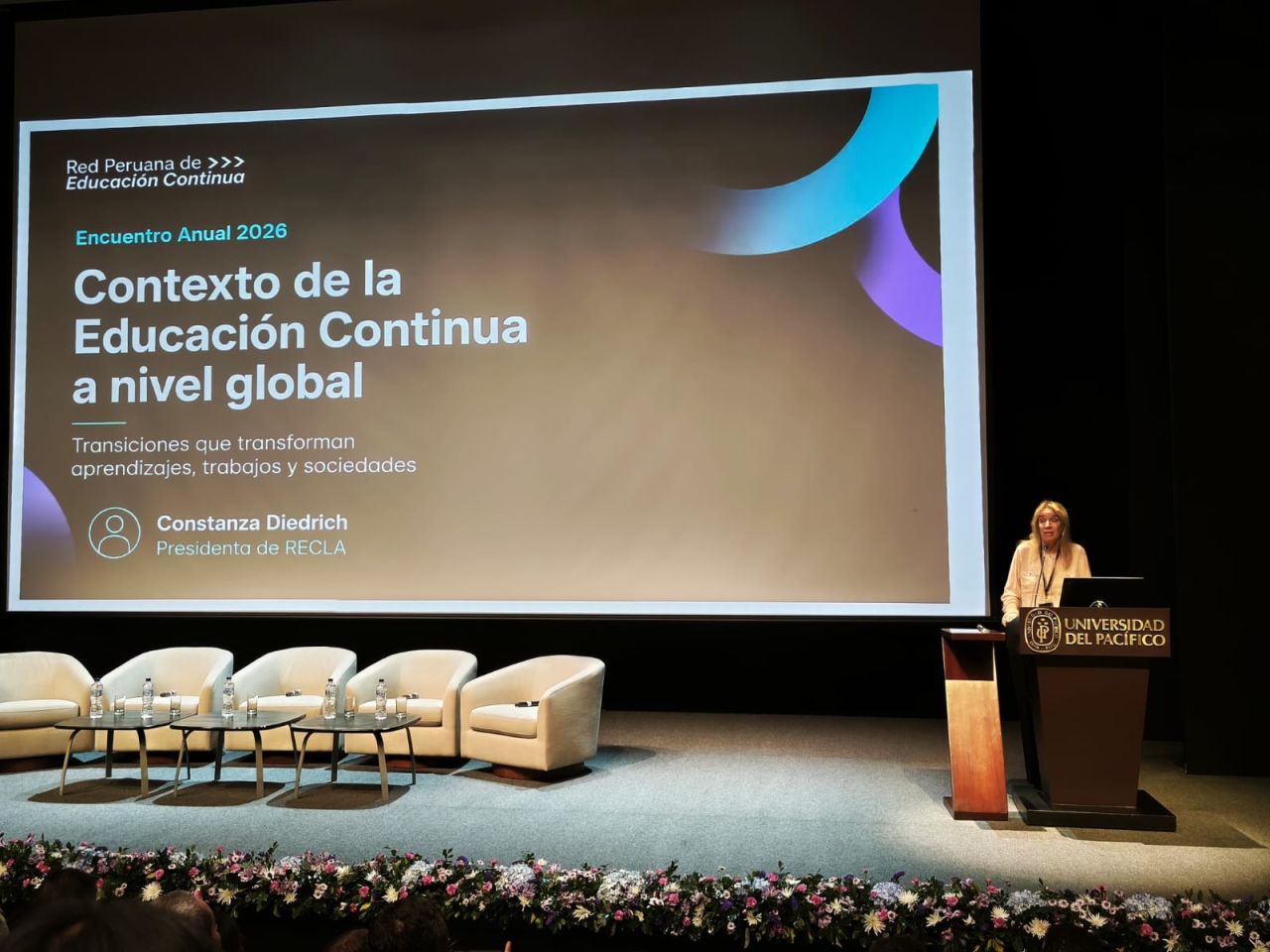
This was one of the questions raised by our RECLA President, Constanza Diedrich, during her participation in the 2026 Annual Meeting of the Peruvian Network of Continuing Education, held on September 9 in Lima, Peru.
The meeting, dedicated to reflecting on the evolution of talent, ecosystems and the transformation of learning, brought together leading figures from the university and business sectors to discuss the changes that people, organizations and educational institutions are going through.
At the opening, our President presented the conference “Context of Continuing Education at a global level”, in which she proposed to look at this scenario from three processes that are happening at the same time: the technological revolution, the demographic transition and the transformation of work.
We live longer, we need to learn for longer, and at the same time, what we need to learn is changing faster and faster. Added to this are less linear career paths, which mean that people's relationship with university can extend far beyond the moment they obtain a degree.
From this perspective, four important changes were included for Continuing Education:
From degree to career path.
The relationship with the university can continue during different moments of professional and personal life.
From closed programs to flexible pathways.
Proposals that allow for the articulation, accumulation, and recognition of different learning experiences.
From content to skills.
Focusing on what people can do with what they learn and on their ability to continue learning.
From supply to ecosystem.
Building learning opportunities in collaboration with businesses, government, organizations, social actors and local communities.
This meeting led to an important conclusion for the universities:
Continuing education is ceasing to be a complementary activity and is taking on an increasingly strategic role.
“This change involves much more than expanding the academic offerings. It also entails reviewing institutional capacities, curriculum designs, recognition and certification systems, evaluation, quality, and ways of connecting with the community.”
During the day, our President also coordinated the workshop “Culture of continuous learning for organizational transformation”, a space to talk about how to make learning part of the daily way of working within organizations.
Faced with transformations of this magnitude, no university needs to build all the answers in isolation, because networks allow sharing experiences, comparing learning, and circulating knowledge that can serve other institutions.
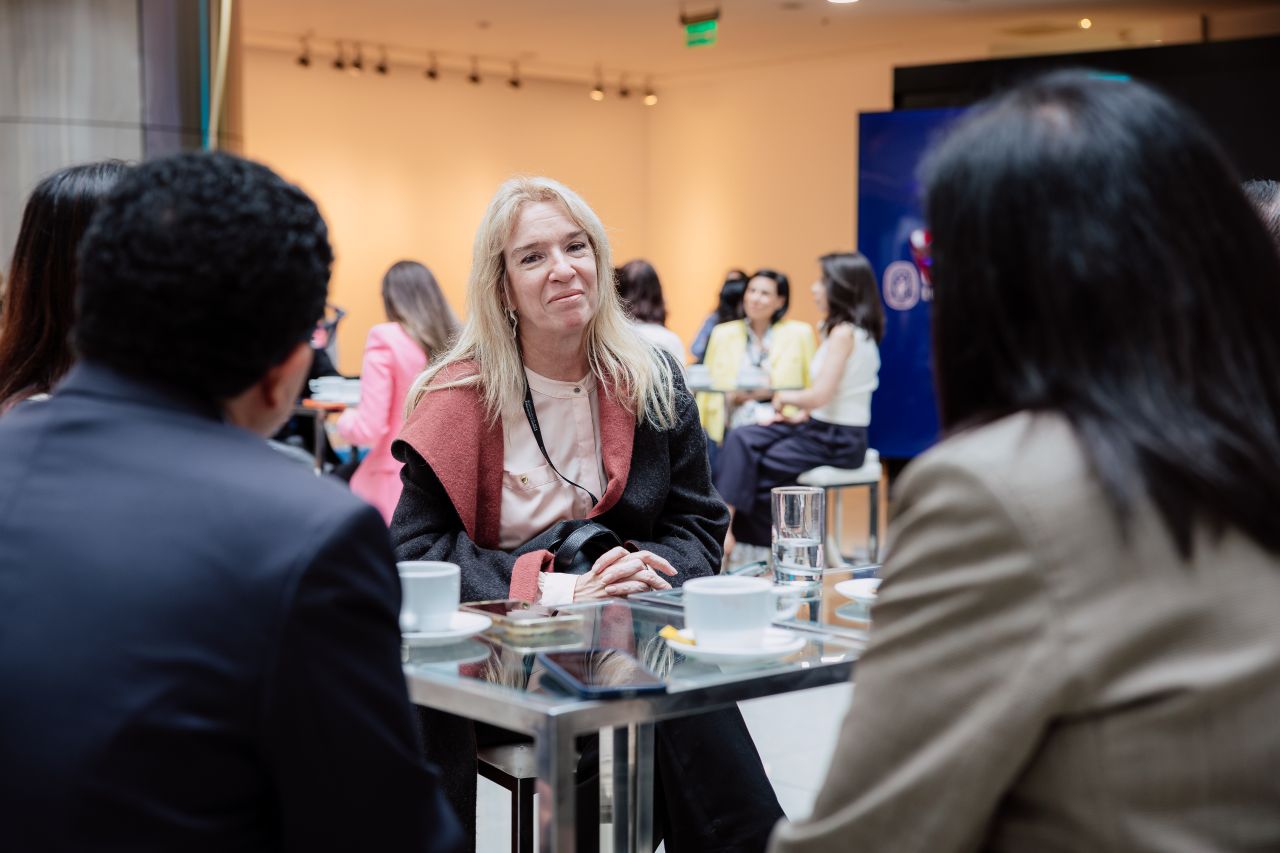
“Networks allow us to move from isolated innovation to collective intelligence.”
At RECLA, we will continue to open these spaces for meeting and conversation with the institutions and networks that, from different parts of Latin America, are thinking about and doing Continuing Education.
RECLA.