
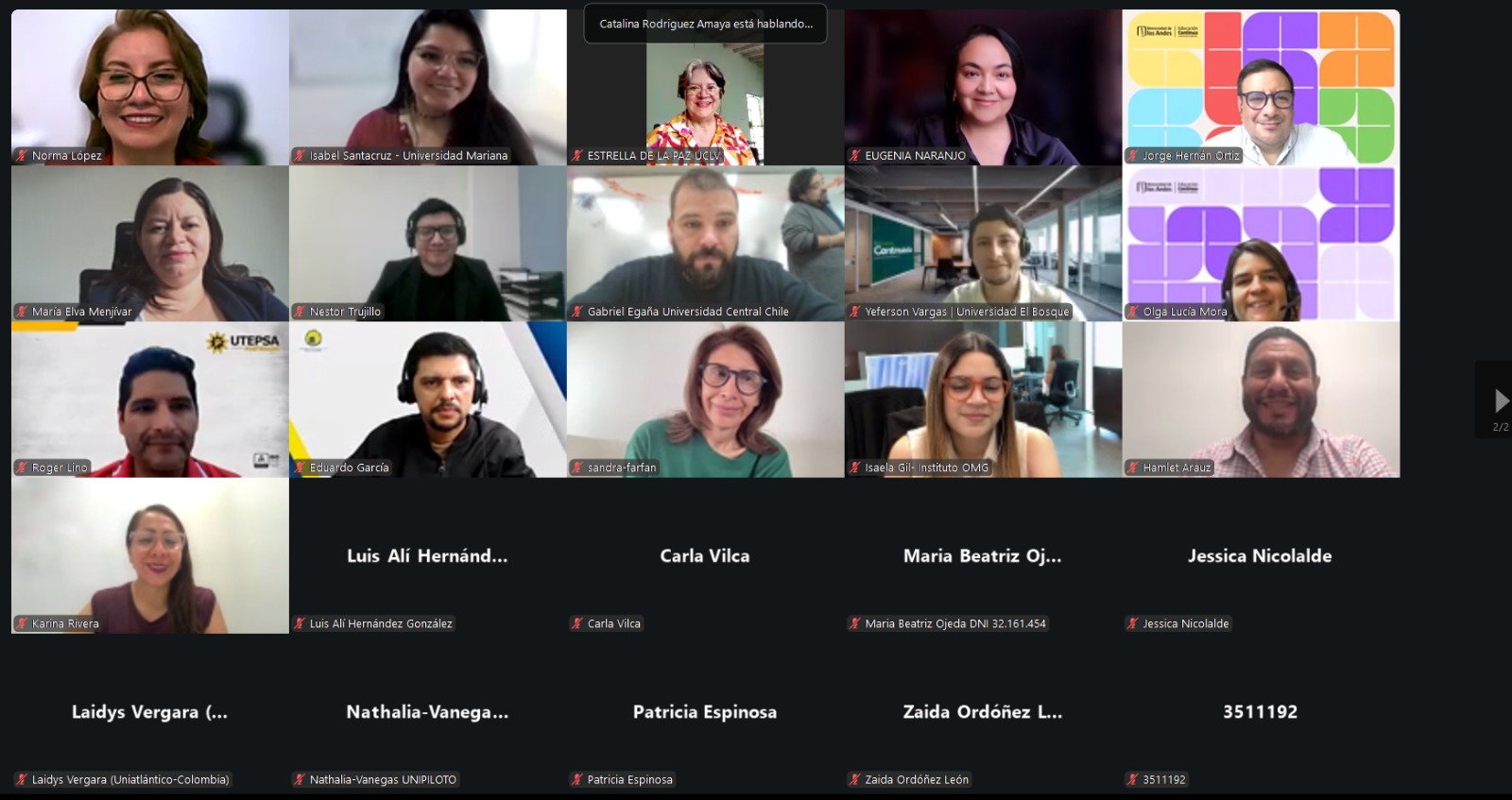
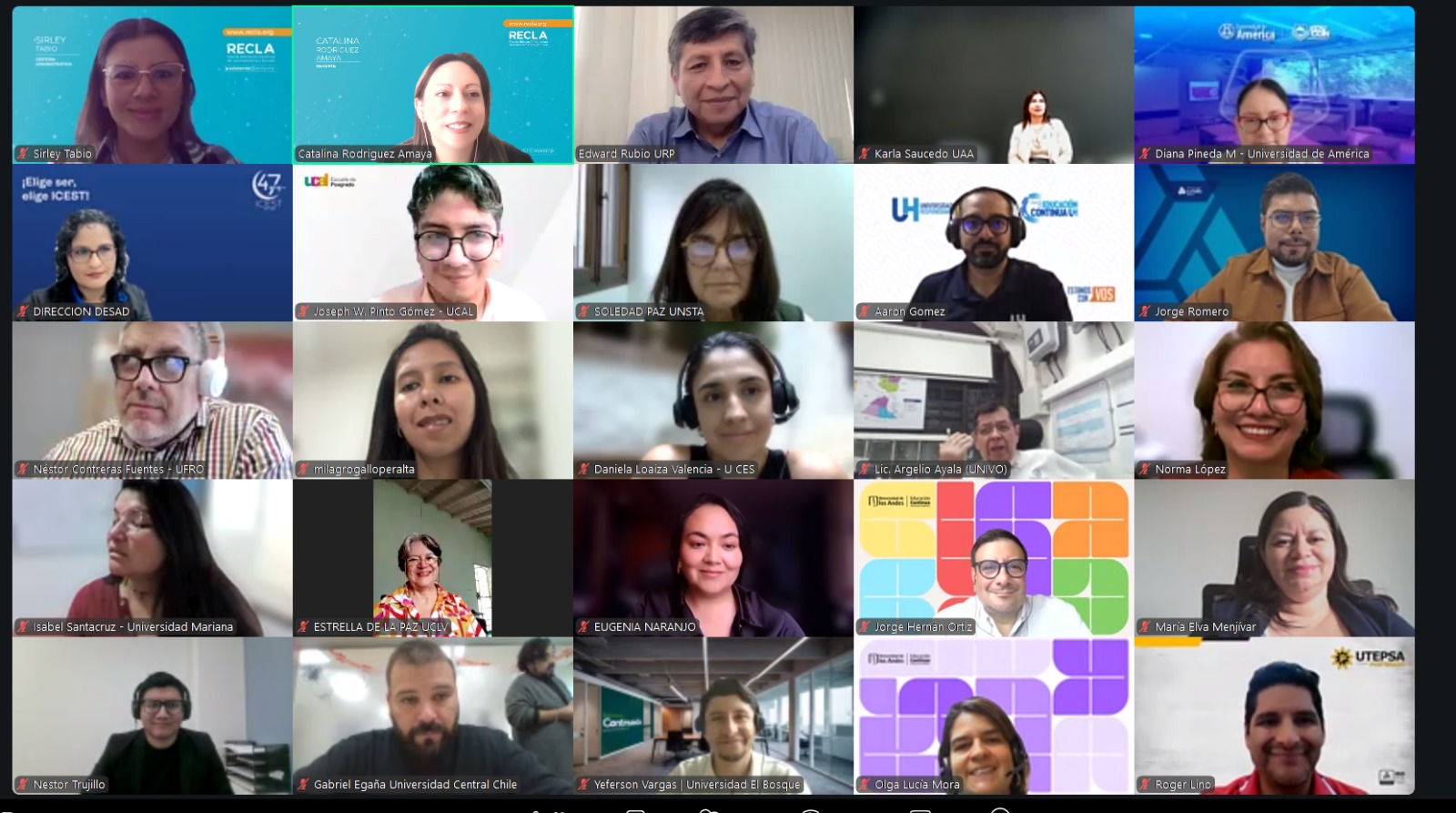
How can Continuing Education build stronger relationships with businesses, public institutions, and other stakeholders? This was one of the questions that guided our latest workshop, "Linking with Organizations," held on October 9th, with 35 participants and led by Edward Rubio, Director of Continuing Education at Ricardo Palma University, Peru.
The event brought together directors and heads of Continuing Education to work on three central criteria: the relationship with stakeholders, the articulation of the different areas of the university, and the measurement of the impact of training.
One of the workshop's key themes was the need to organize stakeholder relations as part of the strategic management of Continuing Education. This involves identifying the needs of each stakeholder group, maintaining spaces for direct dialogue, and developing relevant training proposals for companies, public institutions, local governments, and international organizations.
Annual planning, diagnostics, and coordination with internal areas, alumni, and strategic partners were among the elements proposed to give greater continuity to these relationships and generate benefits for both parties.
On the other hand, another criterion highlighted by the workshop was the need for coordination within the institution itself. When faculties, administrative areas, and university services work in isolation, duplication can arise and opportunities for collaboration can be missed.
During the workshop, the idea was raised to move towards a comprehensive model that allows connecting capabilities, organizing a training portfolio in accordance with the needs of the environment, and taking advantage of tools such as CRM and data analytics to manage B2B relationships.
The proposal also includes organizing relationship-building activities during the last quarter of 2026 and working on a relevant offer for 2027, with a focus on connecting training, research, innovation and outreach.
The third criterion raised a necessary question: how to know if Continuing Education actions are generating the expected results?
Participant satisfaction is a relevant indicator, but assessing the impact also requires observing what they learned, what skills they transferred to their work, and how they apply that knowledge in their professional and social environments.
To move forward in this direction, it was proposed to strengthen evaluation instruments, define management and results indicators, and explore technological tools —including artificial intelligence— to analyze information and facilitate decision-making.
Having reliable data allows for reviewing strategies, recognizing opportunities for improvement, and better understanding the contribution of Continuing Education to organizations and society.
At RECLA, these working spaces allow those responsible for Continuing Education to review their practices, share approaches, and take away tools for the challenges they face in their institutions.
RECLA.