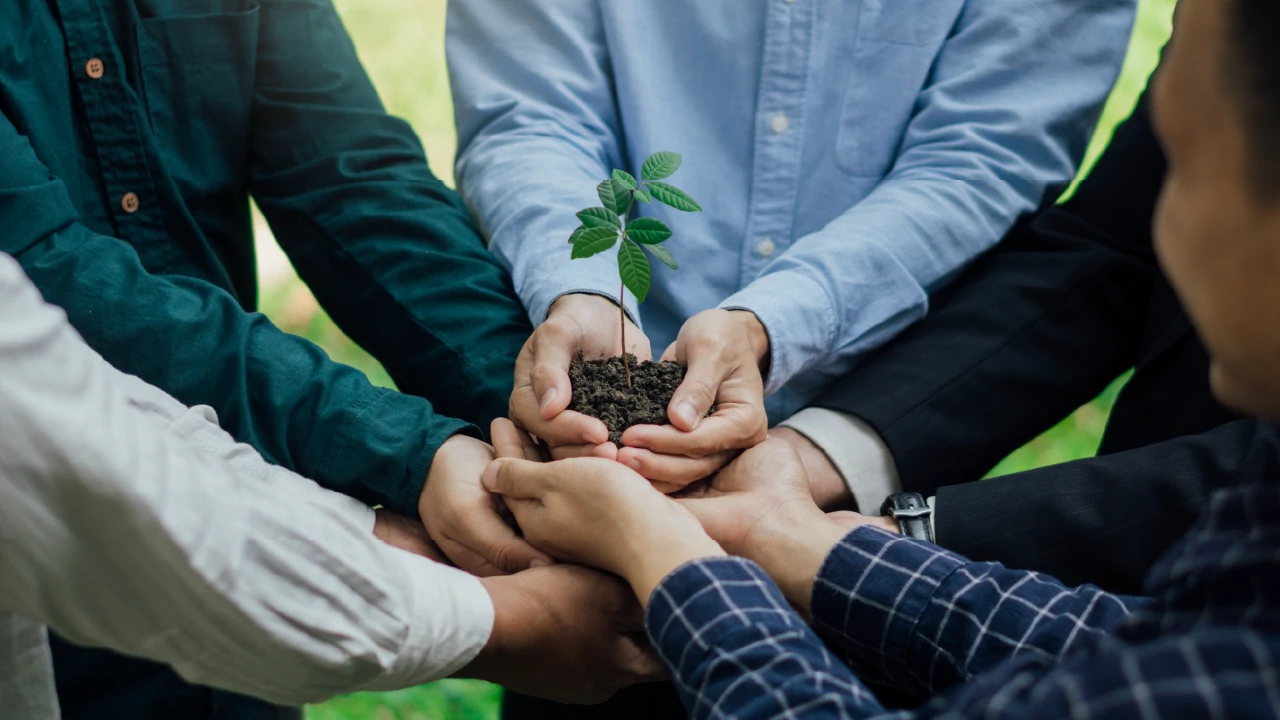

In the context of unprecedented challenges facing higher education, university educators stand as fundamental pillars, acting as true agents of change towards sustainability. Their influence extends beyond the classroom, permeating the entire academic structure and ultimately the society as a whole. Educators have the potential to be leaders in promoting innovative knowledge and fostering the critical thinking needed to solve contemporary problems, finding a balance between economic growth, environmental care, and social well-being.
The need for adaptation in the face of changing educational dynamics and evolving teaching methods is evident, while also confronting the challenges inherent in academic structures that can be resistant to change. Therefore, universities must commit to the professional development of their faculty, supporting them in the adoption of innovative and sustainable practices.
Initiatives at UC Chile

Francisco Urquiza and Bruna Garretón from the Institute for Sustainable Development at Pontificia Universidad Católica de Chile (UC Chile) emphasize that educators must go beyond subject-specific learning objectives, taking responsibility for preparing students for a challenging future and guiding them to contribute positively to socio-environmental crises. This challenge is significant, especially when teachers lack prior training in sustainability and require an update of their knowledge and teaching practices.
UC Chile has made significant advancements in shaping agents of change, explicitly including sustainability in the graduate profile of its undergraduate programs and creating the «Sustainability and Integral Ecology» track. Furthermore, it has established the Institute for Sustainable Development and offers co-curricular opportunities through the Directorate of Sustainability. However, the development of a transversal training program to empower educators to become true agents of change remains pending. Currently, academics can opt for a sustainability course offered by the Center for Teaching Development.
Integration and Future

Another important challenge is to integrate sustainability into all disciplines, respecting their differences and fostering interdisciplinarity. This includes creating joint programs and projects and the active participation of students in sustainability projects, collaborating with the community and industry. Likewise, it is crucial to integrate emerging technologies and novel approaches to keep sustainability education relevant, effective, and adapted to each discipline.
University faculty have the ability to transform higher education and prepare students for current challenges. Therefore, it is critical that institutions provide the necessary support and resources that enable faculty to adapt, innovate, and lead in their fields. Higher education faces a significant opportunity, and faculty must be the protagonists to effectively capitalize on it. Cynthia Cantarutti
Director of Extension, Continuing Education, and International Affairs
School of Dentistry
School of Medicine
Pontifical Catholic University of Chile