
The market segments for continuing education are linked to industry realities. The more oil wells that open or close, the more or fewer underwater welders will need to be trained. Similarly, the more bots replace operators in service centers, the more training laid-off operators will need to rejoin the workforce.
Regardless of the industry, workers are active learners who need to acquire new skills and knowledge to remain part of the workforce. Especially in the last five years, this reality has been addressed, both consciously and unconsciously, through upskilling y el reskilling.
According to Price Waterhouse and Coopers (PwC) and the Global Fund, upskilling could add USD 6.5 trillion to global GDP by 2030, as well as exponentially increase the workforce.
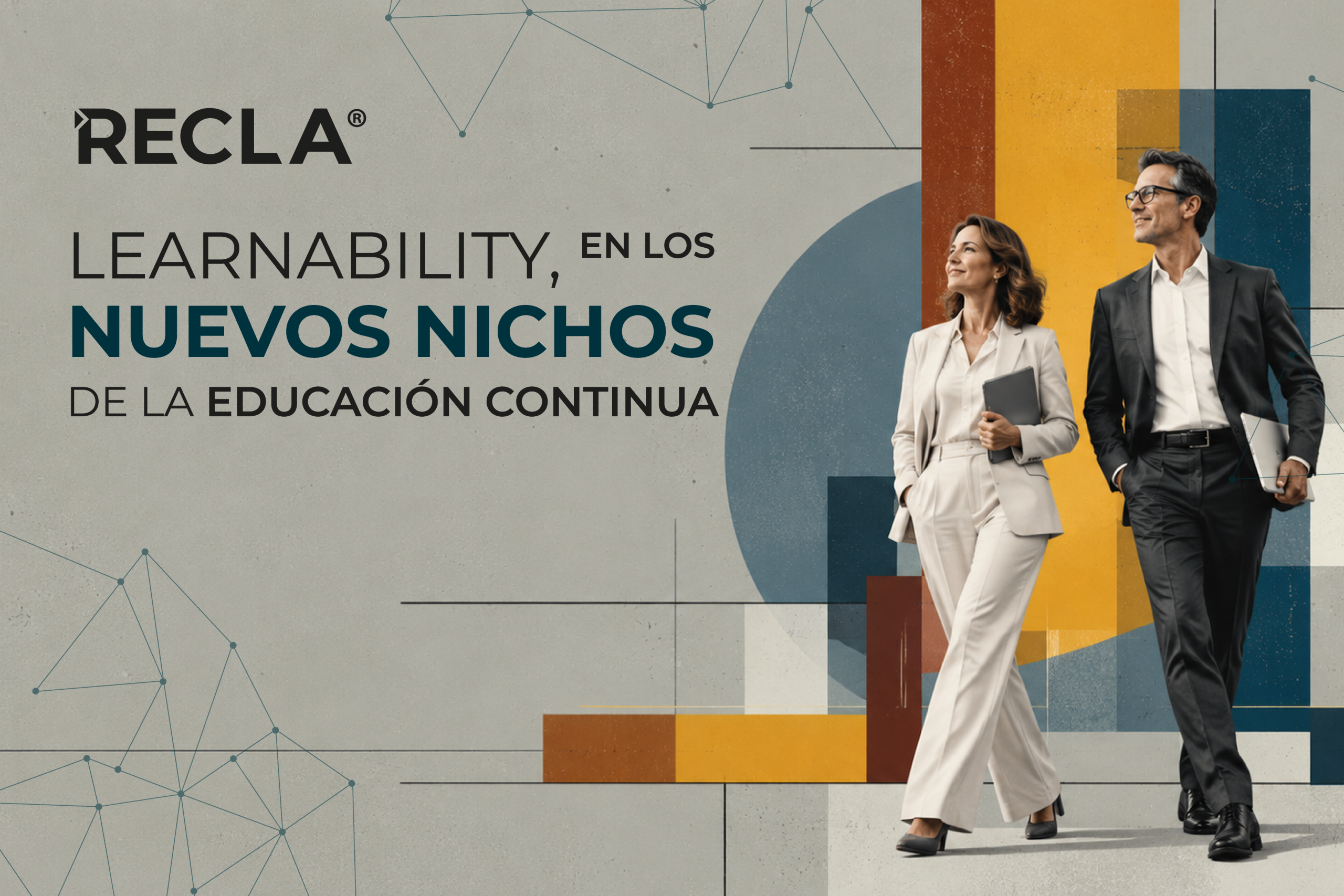
Based on these premises, the concept oflearnability" is developed, which is simply the learner's willingness to acquire and manage new skills and knowledge effectively and efficiently. The key aspect of this concept is not a lack of knowledge or poor skill management, but rather the learner's readiness. Readiness is understood as the attitude one has toward learning. This represents a shift in the profile of the worker/learner from decades past to today.
The percentage of both financial and academic resources that industry needs to invest in reskilling y upskilling its employees is extremely high. To give an example, AI will render 65% of the skills needed across all industries repetitive and inefficient by 2030, according to a LinkedIn data study.
This means that more than half of what the average person knew when starting their career will become redundant and even obsolete due to the integration of AI capabilities and skills. For this individual to remain part of the workforce, their skills need to be updated.
Forbes magazine describes us as facing a dynamic era "that requires a corporate culture steeped in perpetual learning, in which the continuous improvement of skills becomes an institutional value."
From this reality, a new niche emerges: the worker with learnability and the industry in need of retrained professionals. Continuing education centers must be able to incorporate into their programs the new skills that learners seek to develop quickly and meet the rapidly evolving demands of the industry.
The niche markets for continuing education are emerging in the gaps left by the evolution of skills, whether this evolution has mutated or eliminated those skills. Learners need to practice upskilling/reskilling through learnability . upskilling/reskillingpor medio del learnability.
AuthorJosé Andrés Paredes Becerra, Language Coordinator, Center for Knowledge Transfer and Social Innovation – CETCIS, Pontifical Catholic University of Ecuador